







The Confucian Temple in Hanoi, Vietnam
2024-04-08 15:02:08 来源:新华网
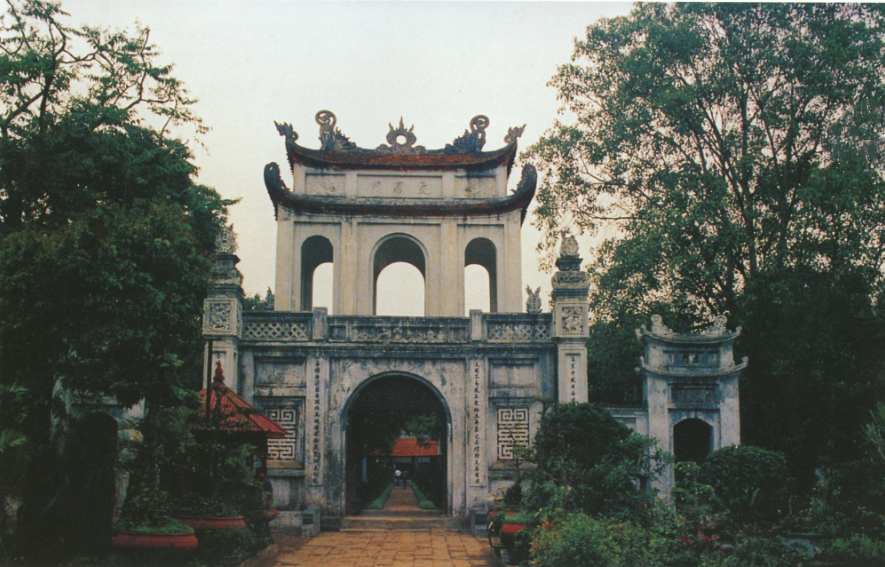
Gate of the Confucian Temple(from Great is Confucius, P178)
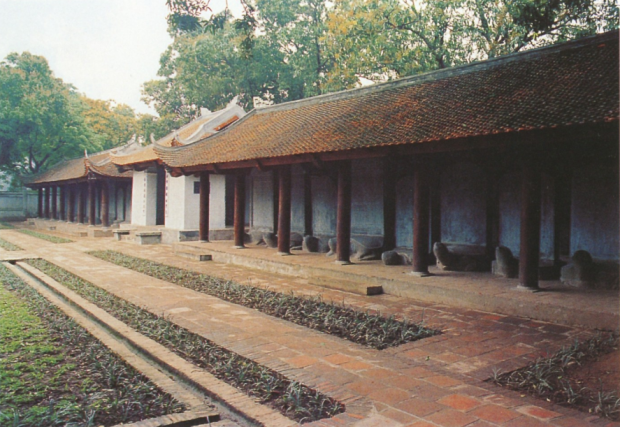
Jinshi Steles (from Great Is Confucius, P178)
Around the Western Han Dynasty, Confucianism spread to Vietnam and continued to develop thereafter. In Vietnamese folklore, Chinese characters are considered to be the necessary "Confucian characters" used in ancestor worship. Vietnamese people are prohibited from trampling on paper with “Confuciancharacters”, and Confucianism is known as "good education" here.
In Hanoi, almost everyone knows about the Confucian Temple, a symbol of Vietnam's reverence for Confucius and Confucianism. It is said to be the first university of traditional Chinese education in Vietnam. In 1070, Emperor Li Shengzong of the Li dynasty in Vietnam decided to build a Confucian temple south of Shenglong City to enshrine Duke of Zhou, Confucius, as well as the other four Confucian sages Yan Hui, Zengzi, Kong Ji, and Menciu, andthe seventy-two most well-known disciples of Confucius. Thedescendants of imperial relatives were allowed to study here, proving that fromthe beginning, the Confucian Temple also served as a national school.
The Confucian Temple is a landmark building in Hanoi, a typical Chinese style architecture, similar to many Confucian temples in China. The existing buildings of the ConfuciusTemple are mostly built by the Li dynasty in the 17th century, covering an area of over 26,000 square meters and facing south. The entire architectural complex consists of five units, with a dismounting monument Stele standing outside the gate. The gate of the Confucian Temple is oftypical orientalstyle. There is a plaque hanging high in the center of the main hall, with the Chinese Characters “Wan Shi Shi Biao”("A teacher for all ages)written on it,with the notes saying “an imperial inscription by EmperorKangxi".
There is a Confucius altar in the main hall, with ancient Confucian scholars from China and Vietnam worshipped on both sides. Unlike other places, the robes and crowns of Confucius and the other four Confucian Sageshere are all in the style of the Ming Dynasty, reflecting the peak of Vietnamese Confucianism in the Ming Dynasty. There are many couplets in the Dacheng Gate, Dacheng Hall, and Kuiwen Pavilion, expressing the great respect of Vietnamese people for Confucius and Confucianism. On both sides of the Tianguang Well, there are 82 Jinshi steles neatly arranged, resembling the atmosphere of Stele Park in Xi’an of China.
DuringSpring Festivals, the Confucian Temple always stagesgrand sacrificial activitiesfor several days, as well as cultural and entertainment activities such as calligraphywriting , chessgames, poetry recitation, cockfighting, and bird fighting.
【编辑:董丽娜】
文章、图片版权归原作者所有,如有侵权请联系删除- 关于参与2026中国国际孔子文化节——全球“云祭孔”活动的倡议
- 以构建中国社会学自主知识体系促进文明交流互鉴
- 全过程人民民主是“两个结合”的典范
- 深入理解“坚持制度治党、依规治党”
- 为全球南方聚力 启金砖合作新程——习近平主席赴印度出席金砖国家领导人第十八次会晤,务实高效、定位精准、成果丰富,取得圆满成功
- 坚持健全上下贯通、执行有力的组织体系
- 孔子研究院2026年第二批公开招聘人员公告
- 孔德安︱仁义为基、礼智并举:孔子的勇思想
- 关于参与2026中国国际孔子文化节——全球“云祭孔”活动的倡议
- 黄河流域民间美术的价值意蕴与时代发展
- 以构建中国社会学自主知识体系促进文明交流互鉴
- 全过程人民民主是“两个结合”的典范