

2026 Nishan Forum on World Civilizations Concludes
2026-10-03 17:20:31 来源:Dazhong Daily 作者:Zhao Lin, Qu Yiru, Wang Qingshan
On the afternoon of September 29, the 2026 Nishan Forum on World Civilizations concluded in Qufu.
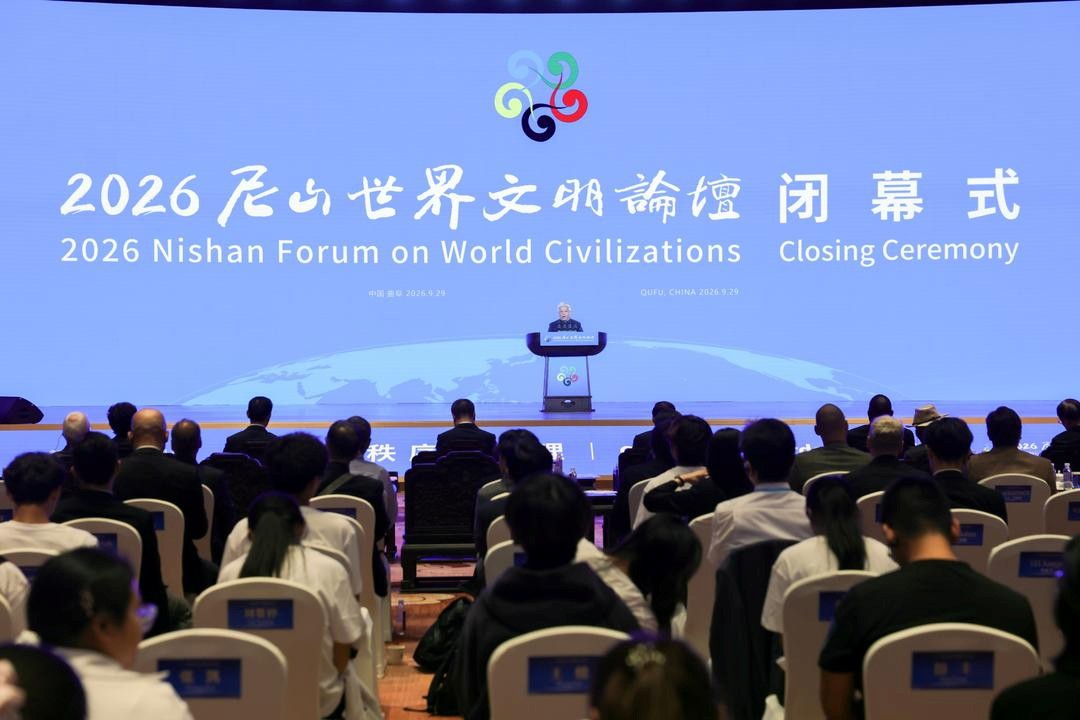
Centered on the theme of "Civilization · Order ·Justice ", the forum featured two sessions of keynote speeches, two high-level interviews, three parallel forums, and eight group dialogues, attracting more than 340 guests from China and abroad. The participants included renowned scholars and experts, diplomatic envoys to China, representatives from cultural sector, leaders of overseas Chinese communities, and cultural influencers, spanning over 40 countries and regions.
Over the past two days, domestic and international experts, scholars, and distinguished guests engaged in in-depth exchanges on topics including the contemporary value and global significance of Confucianism, civilizational resilience and global governance, ideological dialogue and civilizational integration, as well as artificial intelligence and universal harmony for the world. They explored how civilizations can engage in dialogue, how order can be constructed, and how universal principles can be upheld, sending out the "Nishan Voice" and contributing wisdom and strength to the implementation of the Global Civilization Initiative, the promotion of the common values of humanity, and the building of a community with a shared future for humanity.
At the closing ceremony, the keynote session was chaired by Chen Weiping, a professor in the Department of Philosophy at East China Normal University and Deputy Director of the Academic Committee of the Nishan Forum on World Civilizations. Six scholars from China and abroad engaged in in-depth exchanges on civilizational dialogue and the common values of humanity. Moving progressively from diagnosing crises to offering intellectual responses, and from institutional frameworks to practical pathways, they jointly outlined a contemporary vision of "harmony without uniformity."
Mu Fengling, Scientific Supervisor of the Center for China and Asia-Pacific Studies at St. Petersburg State University of Economics and Vice President of the St. Petersburg Branch of the Russia-China Friendship Association,attributed contemporary challenges to three crises: crises of international order, values and interrelations. She argued that Confucian concepts such as "ren and li," "harmony without uniformity," and "the world as one community" can provide ethical support for rebuilding order, restoring values, and fostering civilizational coexistence. She emphasized that Confucianism is not a museum exhibit, but a living body of thought for addressing the crises of our time.
In response to the modern dilemma that humanity wields formidable technological powers yet often loses sight of its fundamental purpose, Professor Li Jianqiu of the Department of Philosophy at Fu Jen Catholic University advocated "returning to our roots while forging new paths," offering a response grounded in Confucian principles ofren,yi, andli. He argued thatrenreminds us that individuals must first be recognized as human beings;yidemands upholding the moral baseline that distinguishes humanity from algorithms; andliemphasizes propriety and respect, thereby transforming traditional humanistic spirit into a resource for global ethics.
While Professor Li Jianqiu responded to the crisis of values at the level of thought, Professor Gan Chunsong, Dean of the School of Philosophy at Nankai University, further addressed the issue from the perspective of institutional carriers. He pointed out that the Confucius sacrifice is not an act of worship directed toward an external object of devotion, but rather a demand placed upon oneself. Through the ritual, participants experience the principle of “emulating the worthy,” making it a process of “learning to become a sage.” In this framework, ritual and music are not ends in themselves, but means of self-cultivation. He emphasized that enabling tangible carriers such as Confucius Temples to once again serve as cultural spaces for the continuity of Chinese civilization is key to promoting the creative transformation and innovative development of fine traditional Chinese culture.
Ideas require fertile ground for practical application. Liu Hongwu, dean of the Institute of African Studies at Zhejiang Normal University, believes that the 70-year history of people-to-people exchanges between China and Africa, as well as between China and Arab countries, represents pioneering practices of the Global Civilization Initiative. From the Tanzania-Zambia Railway and medical aid to Africa to the mutual translation of classical texts and youth exchanges, the two sides have established a new model of civilizational engagement characterized by bidirectional interaction and mutual benefit, demonstrating that international relations need not lead to confrontation; instead, they can achieve common development through mutual learning and exchange.
Eric Greene(Dongfang Ruide), former Academic Vice President of the University of Hawaiʻi at Mānoa, pointed out that contemporary Western ethics is unconsciously converging toward Chinese philosophy. He argued that Mencius's discussions on human nature and virtue can provide a more profound foundation for modern moral judgment. In his view, Western philosophy requires a comparative perspective, and Chinese and Western thought can indeed inspire each other on the fundamental question of "how to live."
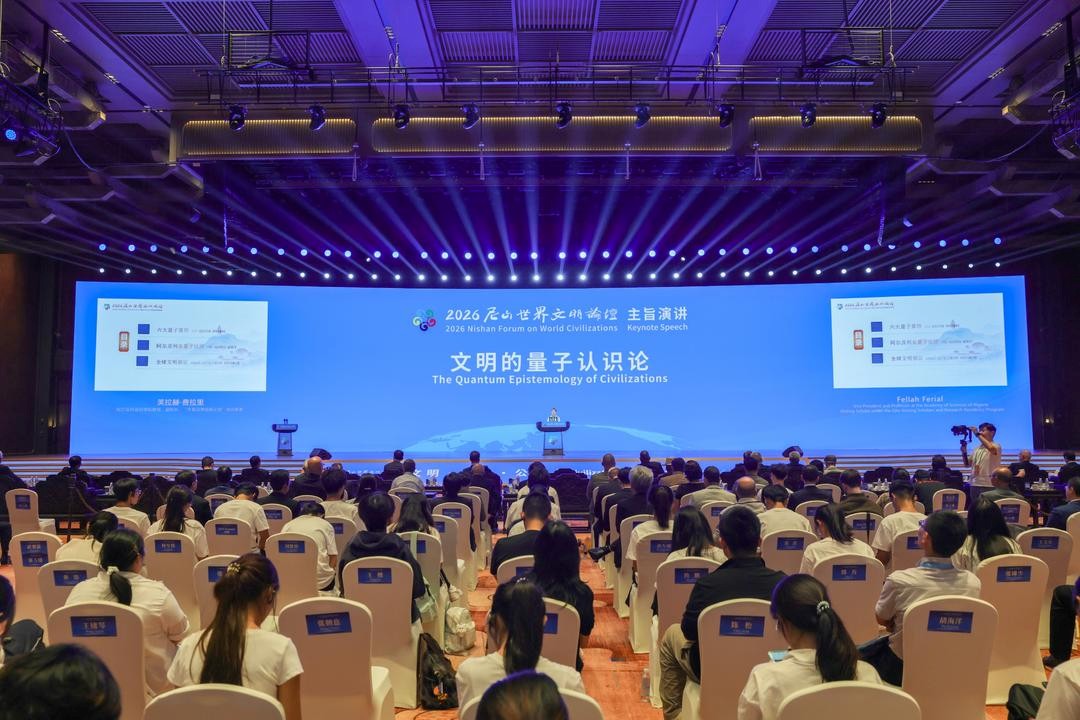
Flaher Ferrari, professor and vice president of the Algerian Academy of Sciences and a visiting scholar under the "Qilu Visiting Scholar and Research Program," employed quantum epistemology to elucidate the dynamics of civilizational exchange, noting that once a civilization is labeled with a single identity, it risks "collapsing" into a stereotypical image. She argues that civilizations are not separate entities, but rather intertwined, overlapping, and non-copiable existences; Confucius's principle of "harmony without uniformity" exemplifies a "non-collapsing epistemology," and in today's world, it is essential to engage in equal dialogue grounded in diversity.
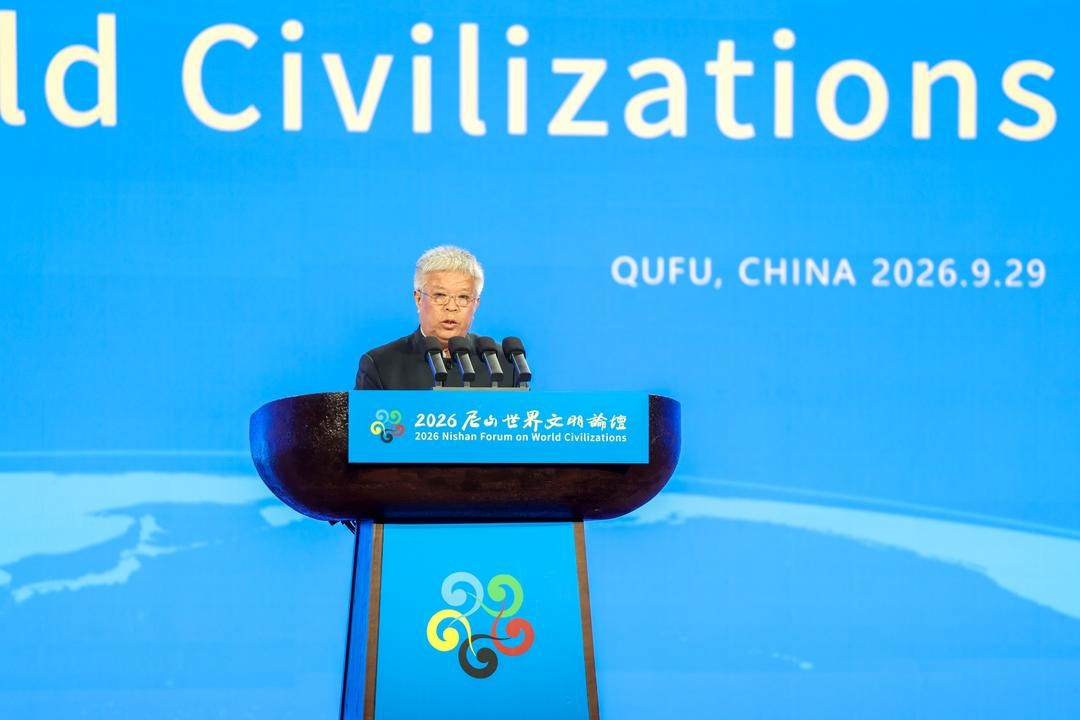
In his academic summary of the forum, Professor Yang Chaoming, Distinguished Professor at the Confucian Studies Institute of Shandong University, stated that participating scholars have reached a consensus: in the face of compounded challenges including deficits in peace, development, security, and governance, it is essential to break through impasses by civilizational dialogue, consolidate foundations through the construction of sound order, and forge a shared spirit based on common principles and consensus; thereby fostering an organic integration of civilization, order, and justice, and contributing profound civilizational wisdom to the implementation of the Global Development Initiative, the Global Security Initiative, the Global Civilization Initiative, and the Global Governance Initiative, as well as to the construction of a community with a shared future for mankind.
At the closing ceremony, the Consensus of the 2026 Nishan Forum on World Civilizations was also read aloud.
Edit:张晓芮
The copyright of the article and the picture belongs to the original author. If there is any infringement, please contact to delete it