

齐鲁访学驻研计划 | 玛利亚·马内利:在古今文明对话中寻获智慧之光
来源:中国孔子网作者: 2025-07-06 09:57
编者按:国外专家学者“齐鲁访学驻研计划”是为贯彻落实习近平主席提出的全球文明倡议,深化文明交流互鉴,由山东省委宣传部指导,尼山世界儒学中心、中国孔子基金会、山东大学共同发起,山东出版集团大力支持,立足山东儒家文化资源富集优势,架设国际人文交流合作桥梁的一项重要举措。
“齐鲁访学驻研计划”学者、雅典科学院希腊哲学研究中心名誉研究员玛利亚・马内利,近日结束了在孔子研究院为期一个月的驻研工作。在接受中国孔子网专访时,她分享了驻研期间的学术感悟与研究见解。
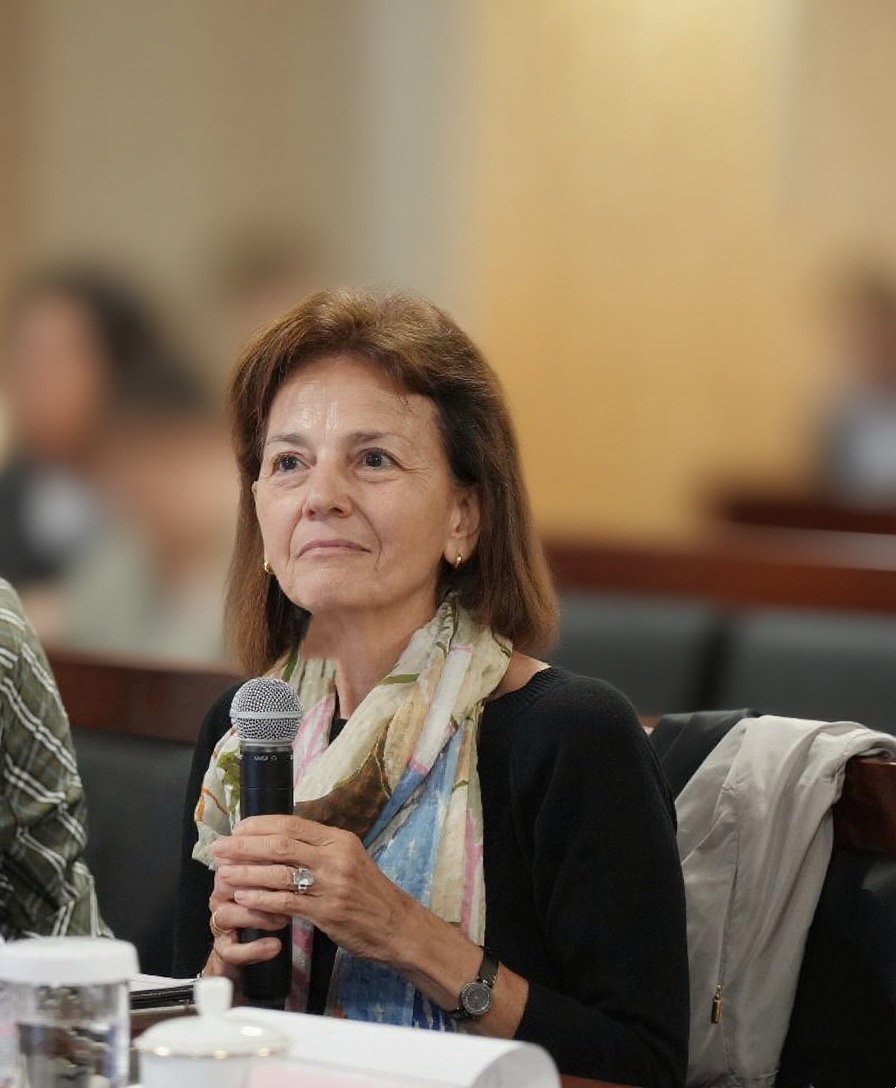
“齐鲁访学驻研计划”学者、雅典科学院希腊哲学研究中心名誉研究员玛利亚·马内利
Q:What is the reason for your decision to participate in the Qilu Visiting Research Program? During your visit to Shandong, I believe you must have experienced many unforgettable moments and gained many profound insights. Please share your experience of studying abroad.
中国孔子网:您决定参与齐鲁访学驻研计划的原因是什么?在山东访学期间,相信您一定经历了许多难忘的时刻,也有了诸多深刻的感悟,请分享下您的驻研感受。
ANS:The reason was the invitation I received in November 2024 from the Confucius Institute to apply for a month of research at your esteemed Institute. My experience during the conference held in Qufu, Nishan and Beijing in July 2024, on Confucius and Aristotle Thought and Modern Challenges, revealed the quality of the speakers as well as their talent in Confucian thought. I considered the invitation to apply and come here to Qufu and work on this topic as a challenge for my research on Confucianism compared to Ancient Greek Philosophy.
玛利亚·马内利:2024年11月,我收到了孔子研究院的邀请,申请在贵单位开展为期一个月的研究。2024年7月,我参与了在曲阜尼山与北京两地举办的孔子—亚里士多德论坛,论坛中诸位学者的学术造诣及对儒家思想的深刻阐释令人印象深刻。我认为,与从事古希腊哲学相比,此次申请赴曲阜聚焦该主题的探索,对我的儒家思想研究而言是一次极具价值的学术挑战。
Q:Did the exchange with other resident scholars during your residency bring you new academic inspiration and thinking? What impact do these inspirations have on your future research?
中国孔子网:驻研期间,与其他驻研学者的交流是否给您带来了新的学术启发和思考?这些启发对您后续研究有哪些影响?
ANS:During my stay I had long discussions with Chinese colleagues about Confucius' philosophy and was able to distinguish Confucius' practical philosophy of Heaven from Ancient Greek Philosophy and Cosmology. The challenge of meeting experts in Confucianism opened my horizon for further research and comparison on other topics in both philosophies, e.g. on Ethics.
玛利亚·马内利:在驻研期间,我与中国同仁围绕孔子哲学展开了深入研讨,厘清了孔子的实践天道哲学与古希腊哲学的宇宙论的关系。与儒家专家的学术交流,不仅拓宽了我的研究视野,更推动我对两大哲学体系中的伦理学等核心议题展开系统性的比较研究。
Q:During your residency, you had multiple academic conversations with Chinese Confucian experts. What insights do you think Confucianism and Greek philosophy have for addressing ethical conflicts in global governance?
中国孔子网:驻研期间,您与中国儒学专家进行了多场学术对话,您认为儒学与希腊哲学对全球治理中的伦理冲突有哪些启示?
ANS:During my residency, dialogues with Confucian scholars revealed profound parallels and distinctions between Confucian ethics and Greek philosophy. This was also the topic I explored during my presentation of the lecture held in Confucius Institute the 23/6/2025. Three insights stand out for addressing ethical conflicts in global governance: Harmony (和 hé) vs. Justice (δικαιοσύνη dikaiosýnē):Relational Ethics (仁 rén) vs. Civic Virtue (ἀρετή aretḗ): Ritual as Governance (礼 lǐ) vs. Rule of Law (νόμος nómos). Ultimately, Confucianism reminds us that ethics begin with relational repair, while Greek thought insists on systemic rigor. Combining these could humanize international law and make institutions more adaptive to cultural pluralism.
玛利亚·马内利:驻研期间,通过与儒家学者对话,我了解了儒家伦理和希腊哲学之间的深刻异同,也成为我于2025年6月23日在孔子研究院演讲时探讨的主题。解决全球治理中的伦理冲突有三种突出的认识:和谐与正义、人伦之仁与公民美德、礼制与法制。儒家思想提醒我们,伦理始于关系修复,而希腊思想则坚持系统严谨,将这些结合起来可以使国际法人性化,使体制更加适应文化的多元化。
Q:You have participated in numerous research projects such as "Zeno, Panetius, Poseidonios, Cicero: Aegean Philosophers". In these projects, what new research ideas have you gained from the collision of ideas among different philosophers?
中国孔子网:您参与了《芝诺、帕奈提乌斯、波塞冬尼奥斯、西塞罗:爱琴海哲学家》等众多研究项目,在这些项目中,不同哲学家的思想碰撞给您带来了哪些新的研究思路?
ANS:Maria Marneli: In this research, which is among my first research projects, I have explored Stoic Philosophy from its appearance in Athens at the late 4th century BCE and its legacy until the Roman period. The three thinkers examined in this research—Zeno of Citium, Poseidonius, and Cicero—demonstrate that Stoic philosophy, despite its longevity of approximately five centuries, retained its core principles largely unaltered, though social and political circumstances influenced certain secondary adaptations.
玛利亚·马内利:作为我早期研究项目之一,本项研究系统考察了斯多葛哲学从公元前4世纪末起源于雅典直至罗马时期的发展历程。研究聚焦三位代表性思想家——西提姆的芝诺、波塞冬尼奥斯、西塞罗,对其理论展开深入分析,分析结果表明:尽管斯多葛学派存续约五个世纪,其核心理念始终保持内在统一性,仅在次要理论维度因社会政治语境的变迁进行适应性调适。
Q:You have published several monographs such as "The Rhetoric of the Stoic School". What do you think are the similarities and differences between Confucianism and the Stoic School? What new fields and directions can be explored in the comparative study of Confucianism and ancient Greek philosophy?
中国孔子网:您出版了《斯多葛学派修辞》等多部专著,您认为儒家思想与斯多葛学派存在哪些异同?儒学与古希腊哲学的比较研究,还可以围绕哪些新领域、新方向展开?
ANS:For the Stoics, rhetoric is both an art and a science that the sage must utilize to guide citizens toward virtue. It operates upon the moral development of citizens to cultivate a virtuous disposition within their souls.
The Stoics prioritized precise philosophical argumentation, even coining new terms for clarity. Cleanthes, Zeno’s successor, used poetic rhythm to introduce students to philosophy—a practice echoing Confucius’s reverence for music as a conduit for the divine. Though we study the Stoics only through surviving excerpts, their commitment to linguistic purity is evident. They upheld the four Aristotelian virtues of rhetoric: clarity, correct language (Greekness), dignified composition, and stylistic adaptability. To these, the Stoics added a fifth virtue: brevity—teachers should convey only what is necessary, avoiding embellishment (Diogenes Laertius Lives, 7.59).
玛利亚·马内利:对于斯多葛学派来说,修辞学既是一门艺术,也是一门科学,圣贤必须利用它来引导公民走向美德。通过作用于公民的道德养成过程,致力于培育灵魂中良善的品格特质。
斯多葛学派优先考虑精确的哲学论证,甚至为确保论述清晰创造了新的术语。芝诺的继任者克利恩斯用诗意的节奏向学生介绍哲学,这种做法呼应了孔子崇敬礼乐并当做通往神圣的渠道的做法。尽管如今我们只能通过现存的摘录来研究斯多葛学派,但他们对语言纯洁性的坚持是显而易见的。他们坚持亚里士多德修辞学的四大美德:表达清晰、语言规范(希腊语)、文风庄重与文体适配。除此之外,斯多葛学派还增加了第五个美德:简洁——教师应该只传达必要的内容,避免修饰(第欧根尼·莱尔提斯的《生活》,7.59)。
Q:The 11th Nishan World Civilization Forum is about to be held, and the theme of this forum is "Beauty for All, Beauty for All - Relations between Civilizations and Global Modernization". What is your understanding of this theme?
中国孔子网:第十一届尼山世界文明论坛即将召开,本届论坛的主题是“各美其美·美美与共——文明间关系与全球现代化”,对这个主题您有怎样的理解?
ANS:This theme is a call to reimagine beauty through progress. That means to think about ancient wisdom and sagehood in order to produce a revised thought for modern times. I have to consider that no civilization is left behind in shaping our shared destiny. Each civilization’s unique 'beauty' flourishes through mutual respect and has a lot of its knowledge to contribute to our new world. Modernization means then that we must reject cultural supremacy for flourishing solutions and co-create the field of mutual understanding in order to find out solutions which will cure world’s deficiencies. The Nishan Forum, through Confucius’ teachings reminds us: Unity isn’t uniformity. It’s harmony composed of diverse notes, ensuring progress elevates everyone. As Heraclitus, the Greek Natural Philosopher and contemporaneous to Confucius argues: “Harmony is produced through the composition of different tones".
玛利亚·马内利:尼山世界文明论坛这一主题呼吁通过进步重新想象美,倡导回溯古代智慧与圣贤思想,为现代文明提供具有修正性的创新理念。在塑造人类共同命运的进程中,文明无优劣之分,每个文明独特的“美”在相互尊重中绽放,并且有很多知识可以为我们的新世界做出贡献。现代化的本质在于摒弃文化至上主义,探寻共生共荣的发展路径,共建文明互鉴的对话平台,为全球治理难题探寻治本之策。尼山世界文明论坛通过孔子的教诲提醒我们:团结一致不是整齐划一,而是由不同音符交织成的和谐乐章,确保进步惠及每个人。正如与孔子同时代的希腊自然哲学家赫拉克利特所言:“和谐生于差异的交融。”
Q:What positive role do you think the Nishan Forum on World Civilizations has played in promoting cultural exchange, mutual learning, and dialogue among civilizations?
中国孔子网:您认为,尼山世界文明论坛在促进文明交流互鉴、推动文明对话方面发挥了哪些积极作用?
ANS:The Nishan Forum inspires thinkers to contribute their knowledge and experience toward promoting cultural exchange. It demonstrates how dialogue empowers people to collaborate, celebrate shared affinities across cultures, and identify new avenues for mutual cooperation.
玛利亚·马内利:尼山世界文明论坛激励思想家以知识与经验推动文明交流互鉴,展现了对话如何为人们的交流赋能,赞颂跨文化之间的共有亲和力,并确定相互合作的新途径。
Q:"The Development of Artificial Intelligence and the Direction of Human Civilization" is one of the sub topics of this year's Nishan Forum on World Civilizations. How do you think the development of artificial intelligence will affect the direction of human civilization, and how can Confucianism and ancient Greek philosophy learn from and integrate with each other in the era of artificial intelligence?
中国孔子网:“人工智能发展与人类文明走向”是本届尼山世界文明论坛的分议题之一,您认为人工智能的发展将如何影响人类文明走向,儒学和古希腊哲学在人工智能时代如何相互借鉴与融合?
ANS:The development of artificial intelligence represents a pivotal crossroads for human civilization—one demanding wisdom that harmonizes technological power with ethical purpose. But also AI could help us in our research projects. Hence, AI must be rooted in virtue, not just efficiency. As Heraclitus observed, "Character is destiny"—and our AI systems will reflect humanity’s character. The Nishan Forum’s call for "Beauty for All" demands we co-create algorithms that honor the soul of civilization: one where technology elevates wisdom, not replaces it. "We shape our tools, and thereafter our tools shape us."
(Cf. McLuhan, echoing Confucius and Aristotle)
玛利亚·马内利:人工智能的发展已成为人类文明的关键十字路口——这是一个需要调和技术力量与道德目的的关键节点。人工智能可以帮助我们推动研究进程,因此,人工智能必须植根于道德,而不仅仅是效率。正如赫拉克利特所言:“性格即命运”——人工智能系统将反映出人类的性格。尼山世界文明论坛倡导“美美与共”,呼吁我们共同创造尊重文明灵魂的新算法:让技术提升智慧,而不是取代智慧。“我们塑造工具,然后工具塑造我们。”(参见麦克卢汉,这是对孔子和亚里士多德的呼应)
Q:This residency experience has brought a new perspective to your academic research. After returning to China, which areas do you plan to explore in depth? How will you showcase China's academic achievements, cultural heritage, and social development style to the academic community and the general public in your country?
中国孔子网:此次驻研经历为您的学术研究带来了新视角,回国后您打算围绕哪些领域深入探索?您将如何向本国的学界与大众展现中国的学术成果、文化底蕴与社会发展风貌?
ANS:My month-long residency at the Confucius Institute offered profound, unexpected insights. The institute’s inspiring environment, exceptional hospitality, and unwavering staff support left an indelible impression. Through delivering lectures and engaging with students’ thoughtful questions, I witnessed firsthand how Confucian philosophy is deeply woven into modern Chinese life. This experience crystallized a paradigm: We must honor our own cultural roots while actively exploring resonances between Confucian thought and Ancient Greek philosophy. Though Confucius was contemporaneous only with Heraclitus, his teachings reveal striking affinities with all classical Greek thinkers—demonstrating timeless wisdom that transcends civilizations.
玛利亚·马内利:在孔子研究院为期一个月的学习经历,为我提供了独到而深刻的认识。孔子研究院积极向上的环境、工作人员热忱的接待给人留下了深刻印象。通过参与专题演讲及与学者的思辨互动,我亲眼目睹了儒家哲学是如何深深地融入现代中国人的生活。这一经历形成了一种认识:我们必须尊重自己的文化根源,同时积极探索儒家思想与古希腊哲学之间的共鸣。尽管孔子与赫拉克利特同时代,但他的教义与所有古典希腊思想家都有着惊人的相似之处,展示了超越文明的永恒智慧。
编辑:宫英英
文章、图片版权归原作者所有,如有侵权请联系删除