

齐鲁访学驻研计划 | 里卡多·波佐:儒学智慧赋能全球治理
来源:中国孔子网作者: 2025-07-05 09:50
编者按
国外专家学者“齐鲁访学驻研计划”是为贯彻落实习近平主席提出的全球文明倡议,深化文明交流互鉴,由山东省委宣传部指导,尼山世界儒学中心、中国孔子基金会、山东大学共同发起,山东出版集团大力支持,立足山东儒家文化资源富集优势,架设国际人文交流合作桥梁的一项重要举措。
“齐鲁访学驻研计划”访问学者、意大利汉学家、哲学家、罗马托尔韦尔加塔大学哲学史教授里卡多·波佐(Riccardo Pozzo),曾多次参与尼山世界文明论坛,并受邀参加第十一届尼山世界文明论坛论坛。在论坛前夕,他接受了中国孔子网的专访,结合学术研究和参会经历,分享了他的驻研感受和学术见解。
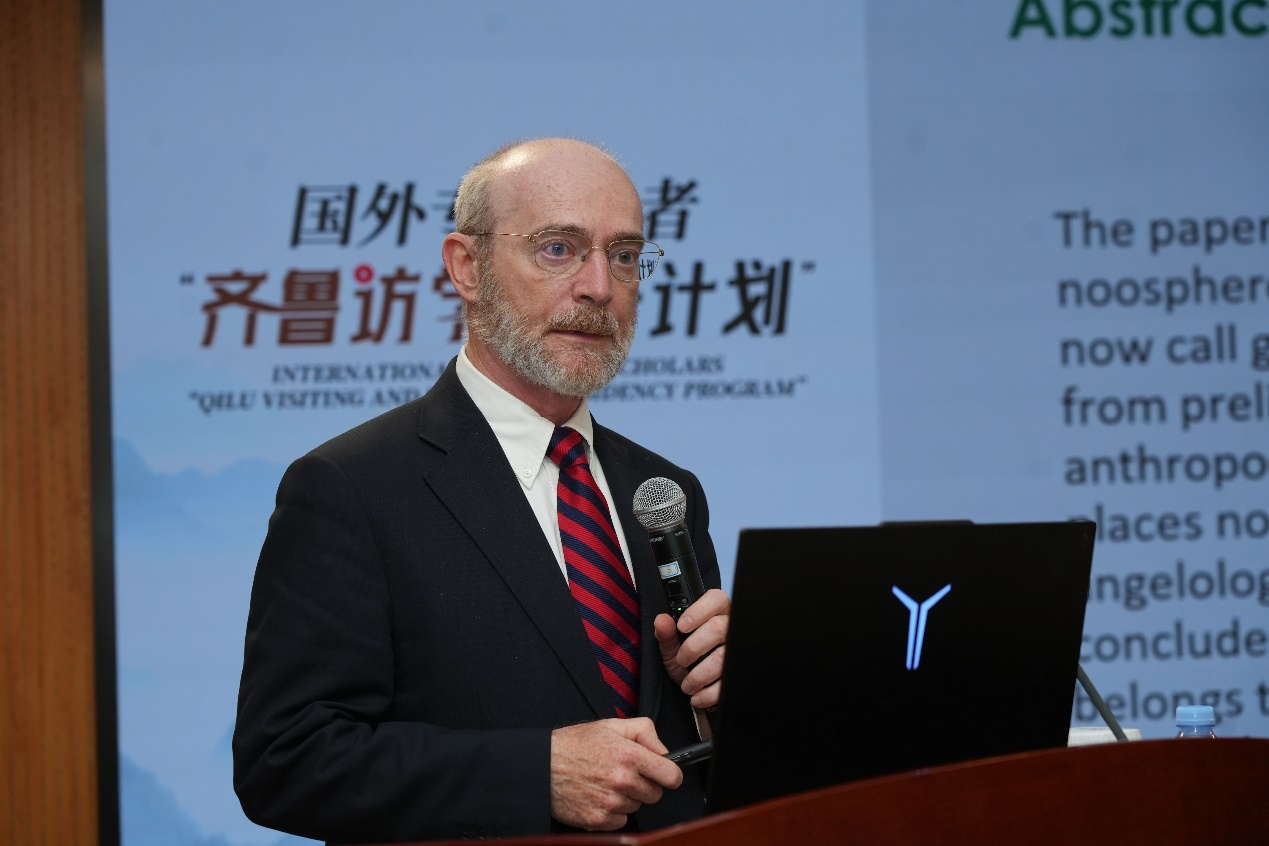
“齐鲁访学驻研计划”访问学者、意大利汉学家、哲学家、罗马托尔韦尔加塔大学哲学史教授里卡多·波佐(Riccardo Pozzo)
Q: You have mentioned that you grew up in a “cultural Chinese” environment, and that your grandfather’s experience of China and the Chinese art collection in your home had a profound influence on you. How did these early experiences inspire and shape your academic interests and research direction?
中国孔子网: 您曾提到自己在“文化中国”的氛围中成长,祖父的中国经历和家中收藏的中国艺术品对您产生了深远影响。这些早期经历如何激发并塑造您的学术兴趣和研究方向的?
ANS: To this question, I answer saying that I consider myself a part of cultural China. TU Weiming once said, we have mainland Chinese, we have Huaqiao and we have all over the world people who belong to cultural China. Now, what is cultural China? Cultural China means that these people had a meaningful experience with China. My grandfather was stationed in Beijing from 1925 to 1929 in the role of naval attaché in the Italian Embassy in the Foreign Legation Quarter. After Beijing, he served on Italian navy ships until 1933 between Shanghai, Guangzhou, Hong-Kong, Tokyo, and Singapore. My grandfather told me many stories about China during my childhood, and my family still has a collection of Chinese artifacts, such as swords, vases, statues, and some scrolls of calligraphy and painting, which I cherish with great affection as they hold ancient memories. These experiences have intensified my interest in China and my desire to learn more about the culture of this country. I also start trying to learn Chinese when I was a boy, and finally had to give up and concentrate on Greek, latin and German. But it was the encounter with TU Weiming in Beijing in 2014 that had me started on Chinese philosophy, because together with to Weminga, we had the task of organizing the War Congress of Philosophy Beijing 2018. It was a very fascinating endeavor, and it gave me the chance of understanding from the inside Chinese philosophy.
里卡多·波佐: 对于这个问题,我的回答是,我认为自己是中国文化的一部分。杜维明曾经说过,我们有中国大陆人,有华侨,有世界各地属于“文化中国”的人。什么是“文化中国”?“文化中国”意味着这些人对中国有着有意义的体验。1925年至1929年,我的祖父曾在北京东交民巷的意大利大使馆担任海军武官。自那之后直至1933年,他一直在意大利海军的军舰上服役,在上海、广州、香港、东京和新加坡之间往返。我的童年时期,祖父给我讲过很多关于中国的故事,家里还收藏着一些中国文物,如宝剑、花瓶、雕像和一些书画卷轴。这些经历增强了我对中国的兴趣,也让我更加渴望了解这个国家的文化。我小时候也曾经尝试学习中文,但最后不得不放弃,专注于希腊语、拉丁语和德语。2014年在北京与杜维明的相遇,让我开始研究中国哲学。我们一起组织了2018年世界哲学大会,这是一次非常有趣的尝试,让我有机会从内部理解中国哲学。
Q:In the process of research on the history of philosophy, what do you think are the intrinsic connections and fits between Western classical philosophy and ancient Chinese philosophy? At the same time, what are the essential differences between them in terms of core concepts, research methods or focus?
中国孔子网:在哲学史研究过程中,您觉得西方古典哲学与中国古代哲学之间存在哪些内在联系与契合之处?同时,它们在核心观念、研究方法或侧重点上又有哪些本质的区别?
ANS:In today’s globalized world, the history of philosophy enables mutual enrichment. The problem is that most historians of philosophy still think philosophy began in Greece, moved to Rome and from Rome each country of the West. I respectfully observe that time has come to endorse Souleymane Bachir Diagne’s powerful warning against the resistance to admitting a plurality of translationes studiorum. It is time to decolonize the history of philosophy against the fabrication of translatio studiorum as the unilinear path connecting Greek thought and sciences to medieval European Christianity, we need to pluralize that history. And to manifest in our textbooks that translatio studiorum is not just Jerusalem-Athens-Rome-Paris or London or Heidelberg but, as well: Athens-Nishapur-Bagdad-Cordoba-Fez-Timbuktu. Hence, the history of philosophy is today at a crossroad. It can either continue as always, or it embraces an intercultural identity rather than an arbitrary, thick cultural identity. For example, in recent years, research into the translations of Immanuel Kant’s works has expanded. However, Kant’s translations in non-Roman scripts remain an under-explored area. Consider the potential of interconnecting Kant’s German and Latin writings with their complete current translations in Chinese (Li Qiuling, Kant 2003-2019), English (Guyer and Wood, Kant 1992-2016), and Russian (Tuschling and Motroshilowa, Kant 1994–2020). Translation is the necessary premise for mutual understanding. Translating Kant into Chinese and examining the impact of Kant translations on the development of Chinese scientific and cultural terminology are subjects that were at the center of my activity in the direction of the Lessico Intellettuale Europeo. Today, the objective has become twofold: to map the many translationes studiorum and to reframe the history of philosophy from a global standpoint. Chinese scholars perceive Kant’s work as an immense conceptual and lexical challenge. They have adapted his writing into Chinese using phonetic, semantic, and graphic loans of foreign words, as well as neologisms and terms derived from Japanese and China’s philosophical traditions (Shen Guowei 2010; Gatta 2022). A collection of Chinese corpora and frequency lists (e.g., the Center for Chinese Linguistics at the University of Leeds) can indicate the degree to which a translation is standardized in modern Chinese, even if it is not included in standard general Chinese dictionaries. Consider, for example, the Key Concepts in Chinese Thought and Culture: Communication Through Translation repository at https://www.chinesethought.cn/, which is the most promising candidate for a cooperation agreement with the Lessico Intellettuale Europeo, https://www.iliesi.cnr.it/?lan=en.
里卡多·波佐: 在当今全球化的世界里,哲学史可以相互促进。问题是,大多数哲学史家仍然认为哲学始于希腊,然后传到罗马,再从罗马传到西方各个国家。在我看来,现在是赞同苏莱曼·巴希尔·迪亚涅的有力警告的时候了。现在是对哲学史进行非殖民化的时候了,不要把翻译研究作为连接希腊思想和科学与欧洲中世纪基督教的单线道路,我们需要使这段历史多元化。我们需要在教科书中表明,translatio studiorum 不仅仅是耶路撒冷-雅典-罗马-巴黎或伦敦或海德堡,还包括: 雅典-尼沙布尔-巴格达-科尔多瓦-菲斯-廷巴克图。因此,哲学史如今正处于十字路口。它要么一如既往,要么接受跨文化特性,而不是武断的、厚重的文化特性。例如,近年来对伊曼纽尔·康德著作译本的研究范围不断扩大。然而,康德的非罗马文字译本仍是一个尚未充分开发的领域。想象一下将康德的德语和拉丁语著作与其当前的完整中文译本(李秋玲,《康德》,2003-2019 年)、英文译本(盖尔和伍德,《康德》,1992-2016 年)以及俄文译本(图施林和莫特罗什洛瓦,《康德》,1994-2020 年)相互连接起来的潜力。翻译是相互理解的必要前提。将康德翻译成中文,以及研究康德译本对中国科学和文化术语发展的影响,是我在欧洲英特尔出版社方向活动的核心主题。如今,我们的目标变得双重化:绘制众多译著的地图,并从全球视角重新构建哲学史。中国学者认为康德的著作是对概念和词汇的巨大挑战。他们利用外来词的语音、语义和图形借用,以及源自日本和中国哲学传统的新词和术语,将康德的著作改编成中文(沈国伟,2010 年;加塔,2022 年)。收集中文语料库和词频表(如利兹大学中国语言学中心)可以显示译文在现代汉语中的标准化程度,即使该译文未被标准通用汉语词典收录。例如,“中国思想文化中的关键概念”(Key Concepts in Chinese Thought and Culture: 通过翻译进行交流》资源库(https://www.chinesethought.cn/),该资源库是最有希望与欧洲英特尔出版社(Lessico Intellettuale Europeo)(https://www.iliesi.cnr.it/?lan=en)达成合作协议的候选者。
Q: As a professor of the history of philosophy, what was your initial intention to incorporate Confucianism into the teaching of the history of global philosophy? Did you observe a shift in students’ cognition in teaching?
中国孔子网:作为一名哲学史教授,您将儒家思想纳入全球哲学史教学的初衷是什么?教学中是否观察到学生认知的转变?
ANS:My interest for Chinese philosophy goes back to re actualizing the hypothesis of the Axial Age. The Axial Age is philosophical, historical metaphor. Let's say it's not real, but it's useful. Philosophy began at the same time in China, India, Persian Israel and Greece. And this is true. The point is that it was neglected in the history of philosophy in the Western world. They were considering his philosophy from Greece to the United States to say so we were not looking around. And I decided it was time to correct this.
I have been teaching the history of Song-Ming Rujia at Tor Vergata since the 2020 Fall Term. Many students attended the courses, six M.A. thesis and two Ph.D. under my direction have considered issues related to Chinese philosophy. Students were happy to change their views on the history of philosophy. They were ready to abandon the Eurocentric textbooks they were used to and switch to textbooks that opened the canon of the history of philosophy to all cultures descended from the axial age. As regard the need of widening the canon, Jürgen Habermas has recently decided to eventually break the Eurocentric cage and expand the scope of the history of philosophy by including Confucius and Laozi. We must continue in this direction, which the Nishan World Center for Confucian Studies is effectively pursuing by establishing its line of research on Traditional Culture and Chinese Modernization.
里卡多·波佐:我对中国哲学的兴趣可以追溯到我想重新实现轴心时代的假设。轴心时代是一种哲学上的、历史性的比喻说法,这个时代不是真实的,但这么说却是有用处的。在轴心时代,哲学同时起源于中国、印度、波斯以色列和希腊,这是事实。关键在于,轴心时代说法在西方世界的哲学史上被忽视了。从希腊到美国,他们都在关注他们自己的哲学,并没有环顾四周。我决定是时候纠正这一点了。
自2020年秋季学期以来,我一直在托尔韦尔加塔大学教授宋明理学史。许多学生参加了这些课程,我指导的六篇硕士论文和两篇博士论文都探讨了与中国哲学有关的问题。学生们乐于改变他们对哲学史的看法。他们愿意放弃他们习惯的欧洲中心主义教科书,转而使用向轴心时代后裔的所有文化开放哲学史典籍的教科书。关于扩大正典的必要性,于尔根·哈贝马斯教授最近决定最终打破欧洲中心主义的牢笼,扩大哲学史的范围,将孔子和老子纳入其中。我们必须沿着这个方向继续前进,而尼山世界儒学中心正在通过建立 “传统文化与中国现代化 ”的研究路线有效地实现这一目标。
Q:Today’s frequent geopolitical conflicts have brought many destabilizing factors to global development. As mentioned in the Book of Rites, “The Way of the Way is also the Way of the World”, and Confucianism emphasizes social well-being and social responsibility. What non-confrontational solutions do you think Confucianism can provide for global governance? What is the inspiration for promoting changes in global governance and the building of a community of human destiny?
中国孔子网:当今地缘政治冲突频发,给全球发展带来了诸多不稳定因素。《礼记》中提到:“大道之行也,天下为公”,儒家思想强调社会福祉与社会责任。您认为儒学能够为全球治理提供哪些非对抗性的解决方案?在推动全球治理变革,推动构建人类命运共同体方面有何启示?
ANS:Let me say that in addition to war and conflict, the world is facing a diffused crisis and an urgent need for green and digital transformation. We have only one planet and there is no “Plan B”, so every effort must be made to improve our situation. In those areas, the idea of the “unity of heaven and mankind” can be an inspiration. My main current focus is on the Sustainable Development Goals (SDGs), particularly the 17 Sustainable Development Goals (SDGs) set out in the United Nations 2030 Agenda for Sustainable Development. The key topics of sustainable development are the green transformation and the digital transformation, and to achieve these goals we need a global ethics, an ethics that embraces diversity and avoids conflict in a harmonious way. We therefore need multilingualism and a cosmopolitan attitude with a global perspective to promote peace and global cooperation in the twenty-first century. I make it clear to my students that if life lies on the biosphere shengwuquan , civilization lies in the noosphere renleiquan, with renlei meaning literally humanity, which fits well into China’s contemporary focus on the human community with a shared future (renlei mingyun gongtonti).
里卡多·波佐: 我想说的是,除了战争和冲突,世界还面临着分散的危机,迫切需要绿色转型和数字化转型。我们只有一个地球,没有“B 计划”,因此必须尽一切努力改善我们的处境。在这些方面,“天人合一 ”的思想可以给我们带来启发。我目前的主要关注点是可持续发展目标(SDGs),特别是联合国 2030 年可持续发展议程中提出的 17 个可持续发展目标(SDGs)。可持续发展的关键议题是绿色转型和数字转型,要实现这些目标,我们需要一种全球伦理,一种以和谐的方式拥抱多样性和避免冲突的伦理。因此,我们需要多种语言和具有全球视野的世界主义态度,以促进二十一世纪的和平与全球合作。我向我的学生们明确指出,如果说生命在于生物圈,那么文明则在于人类圈,这与中国当代对 “人类命运共同体”的重视不谋而合。
Q:You have participated in the Nishan Forum of World Civilizations for many times and have been invited to participate in the eleventh Forum. In your opinion, what positive role has the Forum played in promoting exchanges and mutual understanding among civilizations and dialogue among civilizations? What do you think about the theme of this year’s Forum, “Beauty for All—Beauty for All—Intercivilizational Relations and Global Modernization”? As you are going to make an excellent speech at this Forum, can you briefly summarize your core views and their implications?
中国孔子网:您曾多次参与尼山世界文明论坛,并受邀参加第十一届尼山世界文明论坛。在您看来,论坛在促进文明交流互鉴、推动文明对话方面发挥了哪些积极作用?本届论坛主题“各美其美·美美与共——文明间关系与全球现代化”,您如何理解这一主题的核心内涵?您将在本次论坛上作精彩发言,能否简要概述您的核心观点及其内涵。
ANS:Last year, in July 2024, I very much enjoyed the 10th Nishan World Forum, which was well organized. The opening of the conference in the Nishan Sacred Land, with authoritative speakers from government and academia on the stage, shows that the Chinese government is really making efforts to pass on and promote Confucianism and traditional culture, which is very impressing. I was very impressed by the presentations delivered by Chen Lai for China and by Jeffrey Sachs for the West.
I will participate in the 11th Nishan World Forum with a paper that highlights what China and Europe can learn from each other about cultural innovation, which is a new category of innovation studies related to heritage and co-creation. In China, cultural innovation stems from the interaction between tradition and modernization. In Europe, it is the outcome of complex co-creation processes that involve the reflection of knowledge flows across the social environment while promoting diversity within society. After an introduction, the paper considers how cultural innovation is defined and carried out in both regions as a step toward establishing new forms of cultural renaissance in response to the need to recover from the decade that experienced the pandemic. Cultural innovation is about fostering outreach for the well-being of individuals and groups. Institutional change, access, participation, and use of cultural content are the key indicators of cultural innovation, and societal readiness for reflection and inclusion its outcome.
里卡多·波佐: 去年7月的第十届尼山世界文明论坛组织得非常好,我非常喜欢。会议在尼山圣境开幕,来自政府和学术界的权威人士登台演讲,这表明中国政府确实在努力传承和弘扬儒家传统文化,令人印象深刻。尤其是陈来先生和杰弗里·萨克斯先生,他们的演讲给我留下了深刻印象。我将参加第十一届尼山世界文明论坛,并提交一篇论文,重点介绍中国和欧洲在文化创新方面可以相互学习的地方。在中国,文化创新源于传统与现代化的互动。而在欧洲,文化创新则是复杂的共同创造过程的结果,其中涉及对整个社会环境中知识流动的反映,同时促进社会内部的多样性。在引言之后,正文探讨了这两个地区如何定义和开展文化创新,并将其作为建立新形式文化复兴的一个步骤,以满足从经历了大流行病的十年中恢复过来的需要。文化创新是为了促进个人和群体的福祉。体制变革、获取、参与和使用文化内容是文化创新的关键指标,而社会为反思和包容做好准备则是文化创新的结果。
Q:As a visiting scholar under the Qufu Visiting and Residency Program, you have carried out a wealth of academic exchange activities in Shandong. How did these experiences help you in your academic research? What role do you think this program has played in promoting the cooperation between China and Italy in the field of Confucianism?
中国孔子网:您作为“齐鲁访学驻研计划”的访问学者,在山东开展了丰富的学术交流活动。这些经历对您的学术研究产生了哪些具体帮助?您认为这一计划在促进中意两国儒学研究领域合作方面,发挥了怎样的作用?
ANS:Yes. I spent an important research period in Jinan this year. It was four weeks. I stayed on the Shandong University campus, which was very convenient because of the closeness of my residence with the university library and with the Institute of Advanced Confucian Studies in the Humanities Building. So by making short walks, I could meet with colleagues and students. And it was very enriching .As regards to developing Italian Chinese relations, that is still much to do, obviously, with we consider the legacy of Marco Polo in the 13th century, Matteo Ricci in the 16th century. But still, there is much to see in the archives in Rome. We know our fans, our library fans, are cable fans in Rome that has not been read, or which have unedited material which we should see. So we need a concerted effort in that. And also we need an effort in having all Confucian classics be translated into Italian. I'm thinking especially of translating into Italian the works of Wang Yang Ming, which are missing.
China and Italy have a long common history. Think of Marco Polo in the 14th century and of Matteo Ricci in the 16th century. I am in touch with Professor Emanuele Raini, who is in charge of the archives located in Rome that preserve the letters reports (written in Latin or in Italian and other European languages) of the China missions together with many unedited Chinese documents that open a window on the daily life of Chinese Christian communities and the reaction of Chinese society to Christian activities. Also in this case, it is time to offer a corrective to a Rome-centered vision of the missions.
里卡多·波佐: 是的。今年我在济南度过了一段为时四周的重要的研究期。我住在山东大学校园非常方便,因为我的住所靠近大学图书馆和人文楼的儒学高等研究所,只要步行几步就可以与同事和学生见面,过的非常充实。关于发展意中关系,考虑到13世纪马可波罗和16世纪利玛窦的文化遗产,显然还有很多工作要做。在罗马的档案中仍然有很多值得一看的东西。在图书馆里还有大量我们应该看到的未经编辑的原始材料。因此,我们需要在这方面作出共同的努力。我们还需要努力将所有儒家经典翻译成意大利语。我正在考虑将王阳明的儒学著作翻译成意大利语,这方面还是个空白。
想想14世纪的马可·波罗和 16 世纪的利玛窦,中国和意大利有着悠久的共同历史。我与雷尼(Emanuele Raini)教授保持着联系,他是罗马档案馆的负责人,那里保存着中国传教团的信件报告(用拉丁语或意大利语及其他欧洲语言撰写)以及许多未经编辑的中国文件,这些文件为了解中国基督教团体的日常生活以及中国社会对基督教活动的反应打开了一扇窗。在这种情况下,也是对以罗马为中心的传教视角进行纠正的时候了。
Q:You have long been committed to intercultural academic research, what is the significance of such intercultural interaction at the academic level? In your academic research, you emphasize cross-cultural communication and the training of young scholars. What suggestions do you have for young scholars who are interested in Confucianism?
中国孔子网:您长期致力于跨文化学术研究,这种跨文化互动在学术层面具有怎样的重要意义?您在学术研究中注重跨文化交流与青年学者的培养。对于有志于从事儒学研究的青年学者,您有哪些建议?
ANS:One suggestion I have for students is to get in touch with Chinese civilization and try to be ready to exchange, which means to learn Chinese as much as you can.and especially to reflect on what you read. I give them reading some and I listen to where understand. But it's a worldview that helps streamlining our commitment to peace, the green transition and the digital transition.
And I think we can conclude with reference to the sustainable development goals. The last one, number 16 is peace, justice, and strong institutions. I think Confucianism is a great foundation for peace, justice and strong institution.
里卡多·波佐: 我给学生们的一个建议是,接触中华文明,做好交流的准备,这也就意味着要尽可能多地学习中文,尤其是反思自己所读的内容。我给学生们读过一些中文材料,然后听他们理解了哪里。这是一种世界观,有助于塑造我们对和平、绿色转型和数字转型的承诺。
我认为我们可以参考可持续发展目标得出结论,其中第16个目标是和平、正义与强大机构。我认为儒学就是和平、正义与强大机构的重要基础。
编辑:宫英英
文章、图片版权归原作者所有,如有侵权请联系删除