







汉学中西问 | 艾哈迈德·苏阿迪:让精神性重新成为人类社会的基石
2026-04-07 16:29:37 来源:中国孔子网 作者:张晓芮 李英潇
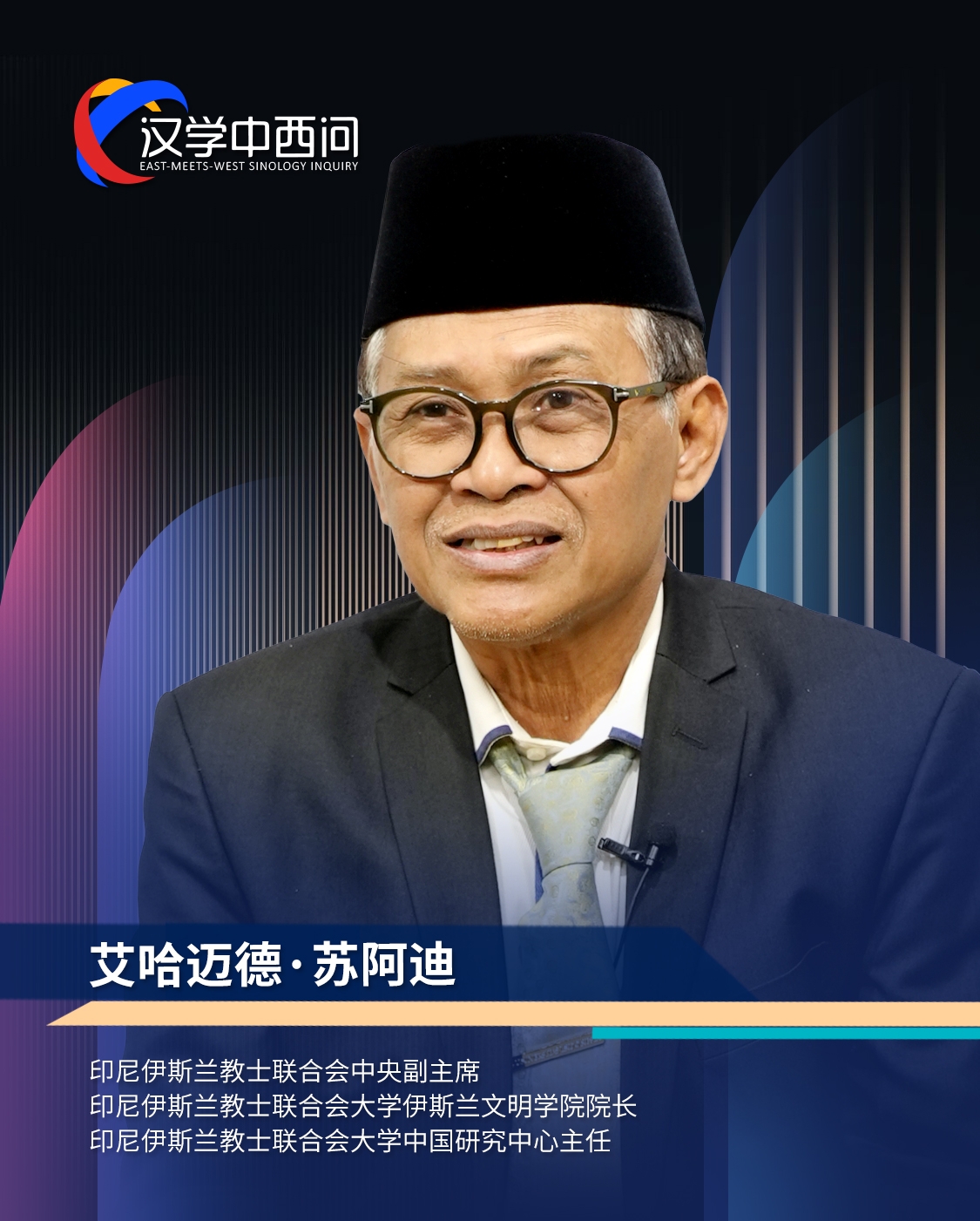
编者按:国际知名学者“齐鲁访学驻研计划”是为贯彻落实习近平主席提出的全球文明倡议,深化文明交流互鉴,由山东省委宣传部指导,尼山世界儒学中心、中国孔子基金会、山东大学共同发起,山东出版集团大力支持,立足山东儒家文化资源富集优势,架设国际人文交流合作桥梁的一项重要举措。近日,“齐鲁访学驻研计划”驻研学者,印尼伊斯兰教士联合会中央副主席、印尼伊斯兰教士联合会大学伊斯兰文明学院院长、印尼伊斯兰教士联合会大学中国研究中心主任艾哈迈德·苏阿迪接受了中国孔子网的专访,分享了他的驻研感受和学术见解。
01
Q:As a senior scholar of Nahdlatul Ulama, what was your original intention for participating in the "Qilu Visiting and Residency Program"? What experiences or achievements do you most look forward to during your one-month research stay in the hometown of Confucius and Mencius?
中国孔子网:作为印尼伊斯兰教士联合会资深学者,您参与此次“齐鲁访学驻研计划”的初衷是什么?在山东为期一个月的驻研有什么计划和期待?
Ans: One of my concerns in scholarly studies is seeking the basis of the East (the Eastern World). In this case, my background is Islam in the Indonesian archipelago and Southeast Asia. This aims to contribute to the dynamics and search for harmonious solutions in a world that is currently trapped in materialism and liberalism that are anti-spiritual and anti-religious and now even trapped in war. Then, I propose a contribution to the foundation of a worldview and ideology based on spirituality and religion that has been the basis of the lives of Eastern societies for centuries.
苏阿迪:我的学术研究关注点之一是探寻东方世界的思想根基。我的研究背景聚焦于印尼群岛及东南亚地区的伊斯兰文化。当今世界深陷物质主义、自由主义思潮,这类思潮背离精神信仰、排斥宗教内核,甚至引发战乱。我希望自己的研究能为化解矛盾、探寻和谐发展之道贡献力量。因此,我主张构建一套立足精神信仰、扎根宗教文化的世界观与思想体系,因为千百年来,这一直是东方社会赖以存续的精神根基。
Before I came here, I had read, though not extensively, about the past history of Islam in China, the significant contributions of Chinese Muslims to the dynamics and history of Islam in the Indonesian archipelago, and the challenges of its future global role. I had heard a little about what was happening in China regarding the debates, research, and role of Confucianism in China, which was already so advanced in terms of scientific and technological development. The progress of development and technology in China is well-known, but the role and dynamics of Confucianism's foundation in China's progress seem to be less well-known, at least in Indonesia. I wanted to learn and delve deeper into the dynamics of these discourses and debates.
来之前,我已粗浅了解中国伊斯兰发展的历史、中国穆斯林对印尼群岛伊斯兰传播发展的重要贡献,以及伊斯兰未来全球发展面临的挑战。中国在科技领域发展迅猛,学界围绕儒学的思想论争、学术研究与社会价值探讨十分深入,我也略有耳闻。中国的发展成就与科技进步举世皆知,但儒学思想作为立国兴邦的精神内核,其价值与影响力却鲜为人知,至少在印尼是如此。我渴望深入钻研相关学术议题与思想论争。
My relative achievement, besides studying and reading, although not extensive, here, was to outline my plans to write papers in international journals and a book, particularly comparing the current dynamics of Islam in the Indonesian archipelago (Aswaja Nusantara) in Indonesia and Confucianism in China, their prospects for the future.
此次驻研,除了广泛研读文献之外,我还计划在国际期刊发表论文、撰写专著,重点对比印尼本土伊斯兰(努山塔拉正统伊斯兰)与中国儒学的当代发展态势,剖析二者未来发展前景。
02
Q:Your professional field is Islam and conflict resolution studies, and you also serve as the Director of the China Studies Center at Nahdlatul Ulama University of Indonesia. Could you talk about what prompted you to expand your research focus from Islam to China studies? How do these two fields influence and intersect with each other in your academic context?中国孔子网:您深耕伊斯兰研究与冲突化解领域,同时担任印尼伊斯兰教士联合会大学中国研究中心主任。能否谈谈,是什么契机促使您将研究焦点从伊斯兰研究拓展至中国研究?这两大领域在您的学术脉络中如何相互影响或交汇?
Ans: After reading quite a bit about the history of Islam in China and the history of Confucianism in China, I tentatively conclude that there are historical parallels between the role and dynamics of Confucianism in China and Islam in Indonesia. Although the historical contexts are different, as Confucianism is 2,500 years old, while Islam in the Indonesian archipelago is approximately 500 years old, the dynamics and challenges are nearly identical. Another difference is that Confucianism in China is indigenous, while Nusantara Islam originated outside of the archipelago, from various regions such as Arabia, India, and China itself. However, it was later transformed into a native religion within the archipelago or Indonesia. Therefore, when we discuss classical Islamic studies, the origins are Islam that developed outside the archipelago in these three centers, whereas classical Confucianism also originated in China, during the dynastic era.
苏阿迪:在研读了大量关于伊斯兰教在中国的历史以及儒家思想的历史资料后,我初步得出结论:儒家思想在中国所扮演的角色及其发展态势,与伊斯兰教在印度尼西亚的情况存在历史相似性。尽管二者的历史背景有所不同——儒家思想已有2500年历史,而印度尼西亚群岛的伊斯兰教历史约500年,但其发展态势与面临的挑战几乎完全相同。另一个区别在于,儒家思想是中国本土产生的思想体系,而马来群岛伊斯兰教起源于群岛之外,源自阿拉伯、印度乃至中国等多个地区,它后来逐渐演变为印度尼西亚群岛的本土宗教。因此,当我们探讨古典伊斯兰学时,其源头是在这三大中心区域发展起来、并传播至群岛之外的伊斯兰教,而儒家思想起源于中国。
However, both have experienced internal transformations throughout history, facing both colonial and national modernization. In both eras, both were marginalized and discriminated against, only to then grow and re-emerge as mainstream. I would like to introduce the terms "Confucianism Turn" and "Aswaja Nusantara Turn." This is where both face the sweeping currents of globalization and contribute to the process of harmony and peace in the future.
然而,二者在历史中均历经内部思想革新,先后遭遇殖民冲击与国家现代化转型,都曾一度被边缘化、遭受偏见,而后再度崛起,重回主流思想地位。我由此提出“儒学转型”与“努山塔拉正统伊斯兰转型”两个概念:如今,二者共同直面全球化浪潮,携手为人类未来的和谐共生、和平发展赋能。
My research outline for journals and books focuses primarily on the dynamics of Islam Nusantara and Confucianism in the struggle to provide a spiritual and religious basis for change at the national and global levels. This is addressed not only from a philosophical, historical, and anthropological perspective, but also from a public policy perspective. This research will likely invite many with similar concerns to collaboratively develop a roadmap for a future of humanity based on spirituality and religion.
我计划发表的论文与撰写的专著,核心聚焦印尼本土伊斯兰与儒学如何立足精神信仰内核,为国家发展、全球变革提供思想支撑。研究将融合哲学、史学、人类学视角,同时结合公共政策维度展开分析。也希望借此研究,凝聚全球志同道合的学者,共同探索一条以精神信仰为底色的人类未来发展路径。
03
Q:You have long been dedicated to the study of Islamic civilization and cross-cultural dialogue. In recent years, President Xi Jinping has repeatedly advocated for promoting mutual learning among different civilizations, including fostering dialogue between Confucian and Islamic civilizations. How do you view this initiative?
中国孔子网:您长期致力于伊斯兰文明与跨文化对话研究。近年来,习近平主席多次倡导推动不同文明互鉴,包括促进儒家文明与伊斯兰文明的对话,您如何看待这一倡议?
Ans:The world is currently trapped in a deadlock and war due to the abandonment of, and even antipathy toward, Western-based spirituality and religion.The Eastern world has an obligation to contribute to finding a way out of this turmoil and violence and entering a dynamic era of harmony and peace. Therefore, dialogue between civilizations and the pursuit of mutual understanding are crucial and urgent. This must be undertaken by the person with the greatest national and international authority and legitimacy, none other than the president. We must encourage and promote President Xi Jinping's initiative not only in the Eastern world but throughout the world. China's development and technological achievements will help strengthen this idealism and promote it.
苏阿迪:当今世界正因摒弃、甚至敌视西方传统精神与宗教,而陷入僵局与战乱。东方世界有责任为人类走出这场动荡与暴力、迈入充满活力的和谐与和平时代贡献力量。因此,文明对话与相互理解的追求至关重要、刻不容缓。我们不仅要在东方世界,更要在全球范围内,鼓励并推动习近平主席的倡议。中国的发展与科技成就,将助力夯实这一理想主义,并推动其传播。
In China, I experienced firsthand that the culture here is very pluralistic, and everyone is given equal opportunities. So, equality, not uniformity, is our term, "Unity in Diversity" (Bhinneka Tunggal Ika), which is already practiced, not just championed. Our challenge is how regional and global public opinion understands this dynamic. Therefore, promotion and awareness must be carried out further at the national, regional, and global levels. We can hope that this collaboration will influence the direction of current global change and a harmonious and dynamic future based on spirituality.
在中国,我亲身感受到这里的文化极具多元性,每个人都享有平等机会。所以,我们倡导的是平等,而非同质化。这正是我们所说的“多元统一”,它早已落地实践,而非仅仅停留在口号层面。我们面临的挑战,是如何让地区及全球舆论理解这种发展态势。因此,我们需要在国家、地区和全球层面,进一步加强宣传与认知普及。我们有理由期待,这样的协作将影响当前全球变革的走向,推动世界走向以精神为根基、和谐且充满活力的未来。
04
Q:In your view, what is the special significance of promoting dialogue between Confucian and Islamic culture in the current global context? Can these two ancient civilizations provide wisdom to address the common challenges facing the world today?
中国孔子网:在您看来,当前全球背景下,推动儒家文化与伊斯兰文化对话具有怎样的特殊意义?这两种古老文明能否为应对当今世界的共同挑战提供智慧?
Ans: Because the mainstream basis of humanity has now reached a dead end and is heading towards conflict and violence due to anti-spirituality and anti-religion. Both Nusantara Islam and Confucianism are very old foundations of humanity, experiencing rich historical dynamics, and have been pushed aside by the anti-spiritual model of humanism that has become mainstream today.
苏阿迪:当今人类社会的主流根基已走入死胡同,正因反精神、反宗教的倾向而不断走向冲突与暴力。马来群岛伊斯兰文化与儒家思想均是人类历史上极为古老的文明根基,历经了丰富的历史演进,却被当下成为主流的反精神化人文主义模式所排挤。
For me, there is no other way to restore spirituality as the basis of humanity, and this must be fought for by all who desire it. Nusantara Islam and Confucianism have strong reasons and rich insights for this, and they must seize the opportunity to return humanity to the spiritual path. Furthermore, China and Indonesia share a very long history, particularly with Nusantara Islam, which was interrupted by colonialism and modernization. Now, post-modernization and post-globalization, it must reclaim its mainstream influence.
在我看来,要重新确立精神价值作为人类社会的根基,别无他法,所有向往这一目标的人都必须为之努力。马来群岛伊斯兰文化与儒家思想对此具备充分的依据与深刻的见解,理应抓住机遇,让人类回归精神发展的正轨。此外,中国与印度尼西亚有着悠久的交往历史,尤其是马来群岛伊斯兰文化的发展曾因殖民主义与现代化进程而中断。如今在后现代化、后全球化时代,它理应重新夺回主流影响力。
I would like to quote Tu Weiming, a political scientist and philosopher from Beijing University and a lecturer at Harvard University in the United States. He stated that with the reemergence of Confucianism in regional and global circles, as well as its collaboration with other Eastern worldviews and philosophies, he said: "We may very well be witnessing the very beginning of global history, rather than the end of history." Therefore, I am optimistic that this cooperation and dialogue will offer great hope for the future.
我想引用北京大学学者、美国哈佛大学教授、政治学家兼哲学家杜维明的观点。他指出,随着儒家思想在地区及全球范围内重新兴起,并与其他东方世界观、哲学思想相互交融,我们很可能正见证全球历史的开端,而非历史的终结。因此,我对这种合作与对话抱有乐观态度,相信它将为未来带来巨大希望。
05
Q:We understand that you have a research interest in the topic of "Confucian culture and child protection." From a comparative perspective of Islamic and Confucian civilizations, what wisdom can the two learn from each other in caring for children, educational concepts, and family ethics?
中国孔子网:我们了解到您对“儒家文化对儿童保护”课题有研究兴趣。从伊斯兰文明与儒家文明的比较视角,您认为两者在关爱儿童、教育理念和家庭伦理方面有哪些值得相互借鉴的智慧?
Ans: This is an important topic when we talk about the future. One of the reasons for the threat of the collapse of Western civilization is the neglect and even dismissal of the importance of the family. Meanwhile, Islam and Confucianism strongly prioritize family values. Family harmony is the key to harmony at all levels: in the community, society, nation, and world.
苏阿迪:谈及未来,这是一个重要的议题。西方文明面临崩塌危机的原因之一,就是忽视乃至抛弃家庭的重要价值。与之相对,伊斯兰教和儒家思想都高度重视家庭观念。家庭和谐是实现社群、社会、国家乃至世界各层面和谐的关键所在。
Harmonious relationships between families, husband and wife, children, parents, neighbors, and citizens are the foundation for peace and prosperity. Therefore, family harmony is the basis for social and political harmony, both vertical and horizontal. All dimensions of the family must be guaranteed rights, justice, and protection from the threat of violence and extermination.
家庭内部、夫妻之间、亲子之间、邻里之间以及公民之间的和睦关系,是和平与繁荣的根基。因此,家庭和谐是社会与政治实现纵向、横向双重和谐的基础。家庭的各个层面都应享有权利保障、公平正义,并免受暴力与毁灭的威胁。
Therefore, almost every country now has plannings and programs focused on these aspects, such as protecting children and women, because that's where prosperity and peace will be achieved, in the sense of equality, justice, and equal access. As far as I know, even though I'm still studying and reading, Confucianism places great emphasis on the family and these aspects. The same is true in the Islam I study. In fact, if we delve deeper, this is the core difference between the concepts of Western and Eastern society, besides spirituality. This means that the family, in all its dimensions, must also be based on spirituality.
正因如此,如今几乎所有国家都制定了相关规划与项目,例如保护妇女儿童权益,因为唯有如此才能实现真正的繁荣与和平,体现平等、正义与机会均等。据我目前学习和研读所知,儒家思想极为重视家庭及上述相关理念,我所研习的伊斯兰教亦是如此。事实上,深入探究后会发现,除精神信仰外,家庭观正是东西方社会理念的核心差异所在。这也意味着,家庭的各个维度同样需要以精神信仰为根基。
06
Q:The year 2026 will mark the 76th anniversary of the establishment of diplomatic relations between China and Indonesia. How can people-to-people exchange programs such as the "Qilu Visiting and Residency Program" inject new vitality into China-Indonesia relations? What role can religious and academic exchanges play in this process?
中国孔子网:2026年将迎来中印尼建交76周年。您认为像“齐鲁访学驻研计划”这样的人文交流项目,如何能为中印尼关系注入新的活力?宗教与学术交流在其中可以发挥怎样的作用?
Ans: This is the most strategic and important opportunity, for me. Taking advantage of the momentum of the 76th anniversary of the establishment of diplomatic relations between China and Indonesia, we must strive to do everything possible to build a stronger foundation for future joint journeys and programs. In addition to cooperation to improve people's welfare in areas such as agriculture, technology, information technology and management, and so on, cooperation to strengthen the spiritual foundation of each community is also crucial.
苏阿迪:对我而言,这是最具战略意义、也最为重要的机遇。借着中印尼建交76周年的契机,我们务必全力以赴,多措并举,为双方未来的同行之路与合作项目筑牢根基。双方既要在农业、科技、信息技术、管理等领域深化合作、增进民生福祉,夯实务实合作基础;同时,加强两国各界民众精神文化层面的交融互通,也至关重要。
I would like to propose a more concrete collaboration, such as holding a conference or symposium or seminar between Islam Nusantara and Confucianism, perhaps by the Nahdlatul Ulama Indonesia University (UNUSIA) with Nishan World Center for Confucian Studies, and also China Confucius Foundation to formulate a more systematic plan to guide the development of a joint roadmap in the short, medium, and long term.
我提议开展更为具体的合作:由印尼伊斯兰教士联合会大学,联合尼山世界儒学中心、中国孔子基金会,举办印尼群岛伊斯兰文化与儒家文化主题会议、研讨交流会,共同制定系统化方案,规划短期、中期、长期合作路线图,引领双方人文交流走深走实。
07
Q:Under the framework of the Belt and Road Initiative, cooperation between China and Indonesia is increasingly close. From the perspective of Nahdlatul Ulama, how do you view the role of the Belt and Road Initiative in promoting mutual learning among civilizations and people-to-people connectivity? Can Islamic and Confucian civilizations form a new dialogue model under this framework?
中国孔子网:在“一带一路”倡议框架下,中印尼合作日益紧密。从印尼伊斯兰教士联合会的视角,您如何看待“一带一路”在促进文明互鉴和民心相通方面的作用?伊斯兰文明与儒家文明能否在此框架下形成新的对话模式?
Ans: The physical relationship between Nusantara, or Indonesia, and China, through trade and diplomacy, dates back a very long time. In the 15th and 16th centuries, this relationship was established through trade in the world's most favored commodity from Nusantara's perspective: spices. Meanwhile, China traded various commodities, such as silk and ceramics, through the establishment of maritime trade routes that strengthened the Chinese Silk Road, which later gave birth to the Maritime Silk Road trade route. Furthermore, this relationship was not limited to trade but also included close cultural and diplomatic ties between China and the powerful sultanates of Nusantara at that time.
苏阿迪:印度尼西亚与中国,依托贸易与外交缔结的地缘往来源远流长。十五至十六世纪,双方依托努山塔拉(印度尼西亚)当时最享誉全球的物产香料开展贸易,建立起深厚联结。与此同时,中国输出丝绸、瓷器等各类商品,开辟海上贸易航线,夯实海上丝绸之路根基,后世由此形成海上丝绸之路贸易通道。此外,两国交往不止于商贸,亦保持着紧密的文化与外交纽带。
The diplomatic travels of Chang Ho, also known as Zheng He, in the early 15th century during the reign of the Yongle Emperor of the Ming Dynasty demonstrate this closeness. Of Zheng He's seven voyages around the world, Zheng He passed through and stopped in the Indonesian archipelago at least six times, stopping at various ports on the islands and conducting diplomacy with the sultans there. Zheng He's Islamization efforts strengthened his acceptance not only politically but also culturally and religiously. Zheng He is also believed to have played a significant role in strengthening the process of Islamization in the Indonesian archipelago and Southeast Asia peacfully.
十五世纪初明朝永乐年间,郑和的远洋出使,正是这种密切联系的有力佐证。郑和七下西洋,至少六次途经并停靠印尼群岛,到访群岛诸多港口,与当地苏丹开展外交会晤。郑和推动伊斯兰文化交融的相关举措,让他在政治、文化与宗教层面均获得广泛认同。外界普遍认为,郑和也为印尼群岛及东南亚地区平稳推进伊斯兰化进程,发挥了至关重要的作用。
All this illustrates the close relationship. Now, the Chinese government's desire to re-establish the Maritime Silk Route is not merely a baseless desire, but also has a strong historical foundation. This program will strengthen not only trade but also culture, diplomacy, and technology.
凡此种种,皆印证了双方源远流长的深厚情谊。如今,中国提出重启海上丝绸之路的构想,绝非空穴来风,而是有着坚实的历史根基。这一合作蓝图,不仅能深化经贸往来,更能赋能文化、外交与科技领域的协同发展。
In this context, what is more crucial today is the mutual importance and experience between the rise of Islam, unique to the Nusantara (Islam Nusantara), and Confucianism, which now occupies a key position in driving development, prosperity, and technology in China. China is also increasingly playing a more significant role in the world due to its progress, prosperity, and impressive technological discoveries.
立足当下,更为关键的是,独具特色的印尼群岛伊斯兰文化,与儒家思想,二者的兴起历程与积淀经验,具备极高的互鉴价值。随着发展腾飞、国力兴盛、科技成果斐然,中国在全球舞台上正发挥着愈发重要的作用。
This relationship is now relevant not only to strengthening trade, culture, and technology, but also to seeking new answers to global shifts and threats. In this regard, dialogue and cooperation based on the spirituality of Islam Nusantara and Confucianism could contribute to the easing of tensions and conflicts worldwide.
当下,双方深化合作,除巩固经贸、文化、科技合作外,更能为应对全球格局变革、化解各类风险挑战探寻全新思路。在此背景下,依托印尼群岛伊斯兰文化与儒家文化的精神内核开展对话合作,有助于缓解全球紧张局势、化解冲突矛盾。
08
Q:Taking this visit as a starting point, what specific prospects do you have for the in-depth exchanges between China and Indonesia in the fields of religion, culture and academia in the future? From what specific academic programs or exchange mechanisms do you think we can start in the future to push the "Confucian-Islamic Dialogue" from concept to in-depth practice ?
中国孔子网:您对未来中印尼两国在宗教、文化与学术领域的深度交流有何具体展望?您认为未来可以从哪些具体的学术项目或交流机制入手,将“儒伊对话”从理念推向更深层次的实践?
Ans: Frankly, not many Indonesian scholars have seriously studied Chinese social ethics based on Confucianism, and conversely, I believe not many Chinese scholars have seriously studied Indonesian social ethics based on Islam Nusantara. Therefore, although there is no tension between the two countries, the gap in mutual understanding remains quite deep.
苏阿迪:坦白说,认真研究以儒家思想为根基的中国社会伦理的印尼学者并不多。反过来,我认为深入研究以努山塔拉伊斯兰为核心的印尼社会伦理的中国学者也寥寥无几。因此,尽管两国之间不存在紧张关系,但彼此的认知鸿沟依然相当深。
I want to encourage, together with my colleagues at my university, UNUSIA, and also in Indonesia, to spark and encourage more serious mutual understanding by conducting in-depth research and exchanging experiences. This, perhaps, will also encourage fellow scholars in China to be more enthusiastic about exploring and understanding each other with their Indonesian counterparts.
我希望与我所在的努山塔拉伊斯兰大学(UNUSIA)及印尼国内的同仁们一道,通过开展深度研究、交流经验,推动并促成更认真的相互理解。这或许也能激励中国学者,以更积极的态度与印尼同行相互探索、增进了解。
Frankly, I'm amazed after spending a month here, conducting research and reading quite a bit about the dynamics and discourses on Confucianism raised by scholars in examining the dynamics of society and government. It turns out my assumption was completely wrong; this is actually very strong, especially in the Xi Jinping era.
说实话,在这里待了一个月,通过研究和大量阅读学者们围绕儒家思想探讨社会与治理动态的论述后,我深感震撼。此前我对中国的认知有限,事实证明我的假设完全错误,尤其是在习近平新时代,这方面的重视程度其实非常高。
The same is true in Indonesia. In various global surveys, Indonesia is considered one of the countries whose population prioritizes religious harmony in every aspect. The government also strives to integrate every program, including human rights enforcement and community harmony, through a religious and cultural approach. In this context, both the characteristics of the community and the government are very close between Indonesia and China.
印尼的情况也是如此。各类全球调查显示,印尼是民众在各领域都高度重视宗教和谐的国家之一。印尼政府也致力于通过宗教与文化路径,统筹推进各项工作,包括人权保障与社会和谐建设。从这个角度看,印尼与中国在社会特质与政府治理理念上十分契合。
This phenomenon and characteristic need to be continuously nurtured and strengthened through collaboration in various fields, not only among religious and intellectual leaders and scholars, but also among politicians, government officials, ordinary citizens, youth, and others.
这种现象与特色需要通过多领域合作持续培育和强化,合作主体不仅限于宗教领袖、知识界精英与学者,还应涵盖政治家、政府官员、普通民众、青年群体等各界人士。
09
Q:What positive impact do you hope this "Qilu Visit and Research Residency Program" and subsequent collaboration will have on the dialogue between Chinese and Indonesian civilizations?
中国孔子网:您希望此次“齐鲁访学驻研计划”及后续合作,能为中印尼文明对话产生哪些积极影响?
Ans: The benefits and positive dimensions of this program, even though I only spent a month there, are immeasurable due to its magnitude. I truly discovered how spirituality has received significant attention from the Chinese public, scholars, and government, openly and enthusiastically developing and engaging in ongoing research and debate.
苏阿迪:尽管我只在待了一个月,但这个项目带来的益处难以估量。我真切地感受到,精神文化领域受到了中国民众、学者乃至政府的高度重视,相关研究与探讨正以开放、积极的姿态持续推进、不断深化。
I have collected hundreds of journals and books—because I can't read or speak Chinese, there are only a limited number in English—by Chinese and Western scholars on Confucianism, related to the dynamics of development, society, government, political parties, diplomacy, ideology, social ethics, and global change. I also explored the dynamics of research in various fields at the global level, specifically on the role of Confucianism in current and future global struggles.
我收集了数百份中外学者关于儒家思想的期刊与著作,这些文献涉及儒家思想在发展态势、社会治理、政府施政、政党建设、外交政策、意识形态、社会伦理以及全球变革等方面的作用。我还调研了全球范围内各领域的研究动态,重点关注儒家思想在当前及未来全球格局发展中所扮演的角色。
I hope that this program will continue and get bigger so that I can invite my colleagues in Indonesia to also be involved in this program. Thank you very much for inviting me to be involved in this program. This is truly amazing.
我希望这个项目能够持续开展并不断壮大,这样我就可以邀请我在印度尼西亚的同行们也参与进来。非常感谢主办方邀请我参加此次项目,这段经历实在让人惊叹。
(翻译:何圆、李弘艺)
【编辑:张晓芮】
文章、图片版权归原作者所有,如有侵权请联系删除